Ras el hanout
A North African spice blend of variable composition.
Ras el hanout (also spelled rass el hanout; Arabic: رأس الحانوت raʾs al-ḥānūt, pronounced [rɑʔs ælħɑːnuːt]) is a spice blend used across Tunisia, Algeria, and Morocco, with variations from place to place. The name translates to 'head of the shop' in Arabic, suggesting it represents the finest spices a merchant can offer. This mix appears in many savory dishes, often rubbed onto meat or fish, or added to couscous and rice.
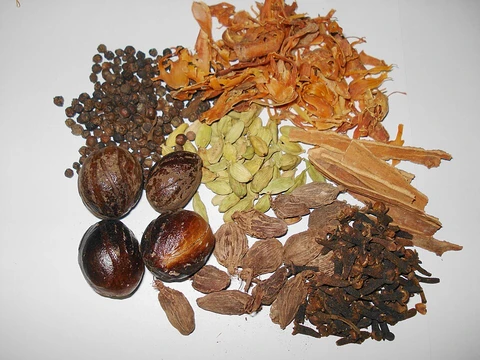
There is no single recipe for ras el hanout; each shop, company, or household may create its own version. The blend typically contains over a dozen spices in varying amounts. Common ingredients include cardamom, cumin, clove, cinnamon, nutmeg, mace, allspice, dried ginger, chili peppers, coriander seed, peppercorn, sweet and hot paprika, fenugreek, and dried turmeric. Some regional additions might include mountain ash berries, chufa, grains of paradise, orris root, monk's pepper, cubebs, dried rosebud, fennel seed or aniseed, galangal, and long pepper. Spices are sometimes toasted before being ground or pounded in a mortar and mixed. While some preparations include salt or sugar, this is not generally considered standard. Garlic, saffron, nuts, and dried herbs are usually excluded, as they are typically added to dishes separately, though some commercial blends, especially in Europe and North America, may contain them.
Certain ingredients believed to be aphrodisiacs, such as the dangerous "green metallic beetles" (cantharides), have appeared in many Moroccan versions of ras el hanout, but these seem irrelevant for flavor.
- field
- Culinary spice blend
- region
- Tunisia, Algeria, Morocco
- known_for
- Complex spice mixture used in North African cuisine
- etymology
- Arabic for 'head of the shop'
Lore & Background
No definitive composition of spices makes up ras el hanout. Each shop, company, or family may have their own blend. The mixture usually consists of over a dozen spices in different proportions, including cardamom, cumin, clove, cinnamon, nutmeg, mace, allspice, dry ginger, chili peppers, coriander seed, peppercorn, sweet and hot paprika, fenugreek, and dry turmeric. Some spices may be particular to the region, such as mountain ash berries, chufa, grains of paradise, orris root, monk's pepper, cubebs, dried rosebud, fennel seed or aniseed, galangal, and long pepper. Ingredients may be toasted before being ground or pounded in a mortar and mixed. Some preparations include salt or sugar, but that is generally not the accepted practice. Garlic, saffron, nuts and dry herbs are generally not included, as they are usually added to dishes individually, but some commercial preparations, particularly in Europe and North America, may contain them. Certain supposed aphrodisiacs, including the notoriously dangerous 'green metallic beetles', cantharides, have appeared in many Moroccan ras el hanout formulations, but these seem to be irrelevant for flavouring purposes.
Reader's Guide
Ras el hanout holds significance as a traditional spice blend that embodies the art of spice blending in North African cuisine. Its variable composition reflects local preferences, family traditions, and the skill of individual spice sellers. The blend is used in a wide range of savoury dishes, from meat and fish rubs to couscous and rice preparations. The inclusion of rare or regional ingredients, such as grains of paradise or dried rosebud, highlights the historical trade routes and botanical diversity of the region. The occasional addition of aphrodisiacs like cantharides, though not relevant for flavouring, points to cultural beliefs about the blend's properties. Its legacy continues in both traditional and commercial forms, with European and North American versions sometimes deviating from accepted practices by including garlic, saffron, nuts, or dry herbs. The blend's adaptability and depth of flavour have made it a lasting element of Maghrebi culinary identity.
Did You Know?
- The name 'ras el hanout' means 'head of the shop' in Arabic, implying a mixture of the best spices the seller has to offer.
- No definitive composition of spices makes up ras el hanout; each shop, company, or family may have their own blend.
- Some Moroccan formulations have included the notoriously dangerous 'green metallic beetles', cantharides, as supposed aphrodisiacs.
- Garlic, saffron, nuts and dry herbs are generally not included in traditional ras el hanout, but some commercial preparations in Europe and North America may contain them.
Spotted an error? Know more?
This is a living reference — every entry is fact-audited, and reader corrections feed straight into our audit queue. Suggest an edit · See this site's audit record